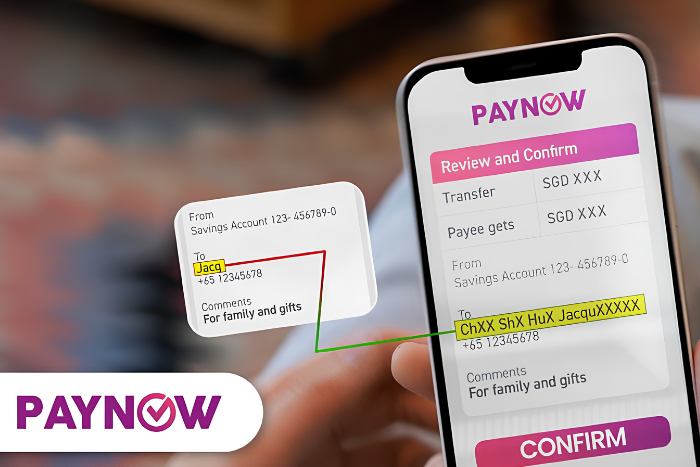
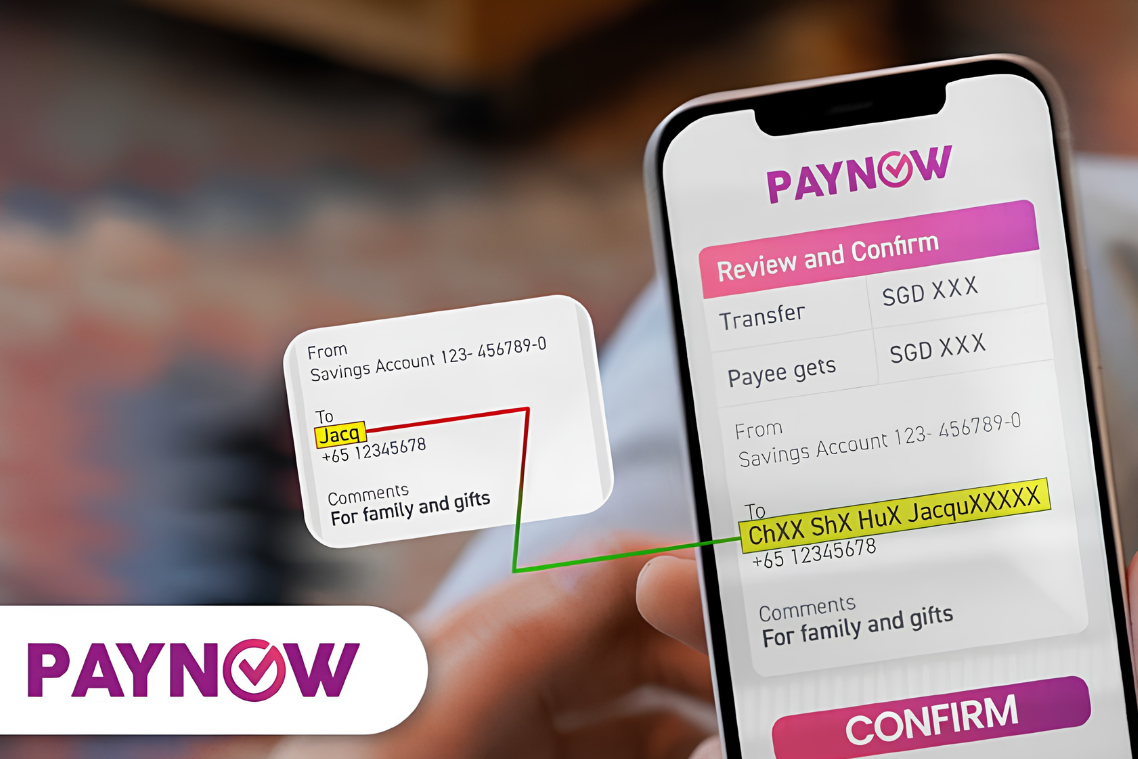
Singapore, May 4, 2026 – To further enhance protection against electronic payment scams, Singapore’s electronic payment system, PayNow, will discontinue the use of nicknames from June 6, 2026. From this date, the public will see the real names of recipients registered with their bank accounts before making payments, though parts of the names will be masked to protect privacy.
Policy Background and Rationale
This significant adjustment was announced by the Association of Banks in Singapore (ABS) in a statement on April 29. Since its launch in 2017, PayNow has allowed users to set custom nicknames for their recipient accounts. However, this convenience has been exploited by scammers who set PayNow nicknames to resemble well-known organizations or trusted individuals, thereby tricking victims into transferring funds. To effectively curb such impersonation scams, PayNow has decided to implement this change to better protect the public’s financial safety.
ABS director Ong-Ang Ai Boon stated, “While PayNow has made everyday payments more convenient, it is equally important that users can transact with confidence.” She added, “Discontinuing the nickname feature removes an avenue that scammers can exploit while safeguarding customer privacy.”
Implementation Details
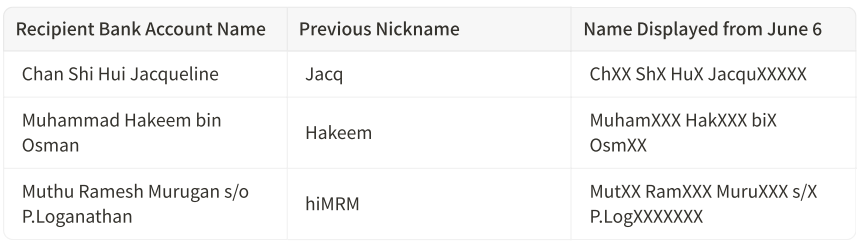
From June 6, all PayNow accounts will automatically update to display real names, with no action required from users. The system will automatically mask certain letters in the recipient’s name to ensure personal privacy. Users will not be able to choose which letters to mask or how the name is displayed; these partial masks will be handled uniformly by PayNow operators and relevant banks.
It is important to note that the recipient’s full real name will still appear on bank statements, a practice that complies with anti-money laundering regulations and ensures traceability of transactions. The logic for the updated PayNow name display has taken into consideration industry best practices, consumer feedback, and is centrally applied to provide consistency. Hence, users will not be able to make changes to the updated PayNow name.
Scope of Application
This new regulation applies only to local PayNow transactions within Singapore. For cross-border transfers, such as those made via Malaysia’s DuitNow or Thailand’s PromptPay, senders previously could not see the recipient’s full name. After the new rule, parts of the recipient’s name will continue to be replaced by asterisks.
Merchant Accounts and PayLah!
Merchants receiving payments via a Unique Entity Number (UEN) already do not have the option to customize or modify their account names. For PayNow users who had not previously set a nickname, their full registered bank name would be displayed during transfers. After June 6, the system will also partially mask the names of these merchants.
Additionally, PayNow and DBS Group’s PayLah! are both popular electronic payment systems in Singapore. Currently, PayLah! still permits the use of nicknames for account names.
User Feedback and Impact
Some users have welcomed this move as a necessary safeguard. Francis Goh, a Grab driver, told The Straits Times, “If this reduces scams, I don’t mind losing the custom name feature. It is too easy for people to impersonate others these days.”
However, others believe the change might cause inconvenience. Freelancers and small businesses that typically receive payments via their personal PayNow accounts and use nicknames might be affected. Tuition teacher Josephine Pereira said she has been using PayNow with her students and their parents, and this change might confuse them.
Scam Case Warnings
In recent years, cases of scams involving modified PayNow account names have been frequent. Here are two typical examples:
- January 5, 2026: An assistant manager at a maid agency was sentenced to 20 months and two weeks in jail for allegedly changing her personal PayNow account to a company name, impersonating the company to collect over S$90,000, and misappropriating the funds.
- June 2023: A private-hire car driver complained to the media that after signing an agreement with a car salesperson, he paid a S$67,000 deposit via PayNow. However, the recipient account, which appeared to display the car dealership’s name, was actually the salesperson’s personal account. The salesperson was suspected of absconding with the deposit and subsequently resigned.
These cases highlight the risks of nickname misuse and underscore the necessity of this reform.
Name Display Examples
The following table illustrates the changes in PayNow recipient name display before and after the discontinuation of the nickname feature: